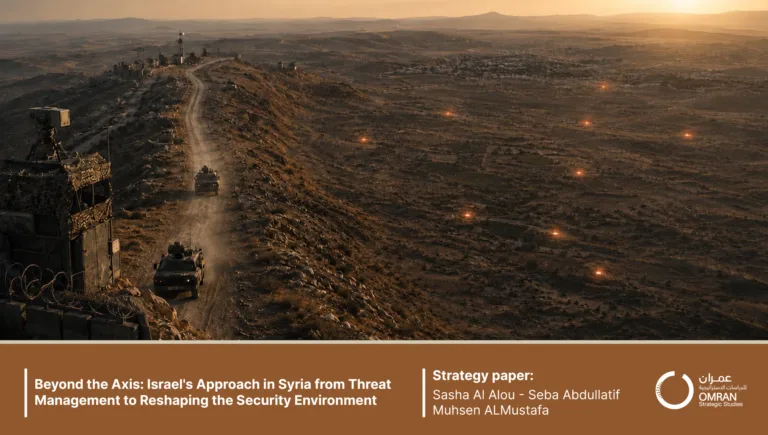


Beyond the Axis: Israel’s Approach in Syria from Threat Management to Reshaping the Security Environment
Executive Summary For More: This paper is excerpted from a longer study published in Arabic by…

Executive Summary For More: This paper is excerpted from a longer study published in Arabic by…

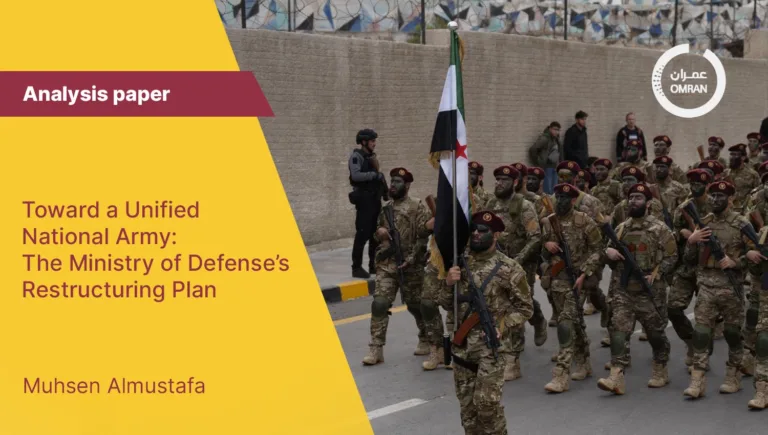
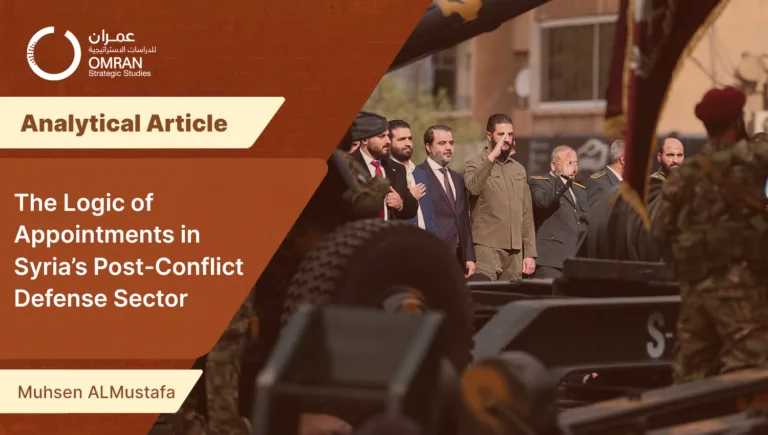
The fall of the Assad regime reopened the question of the army as a state institution rather than an instrument of authoritarian rule, at a moment defined by a security vacuum and military fragmentation that compelled the state to rebuild centralized military decision-making and a legal monopoly over force

With the military balance shifting and regional dynamics realigning, Syria’s Kurds face a rare opening: shift decisively from armed militias to political engagement and pluralism within a constitutional framework. They should seize the opportunity or risk further reversals.

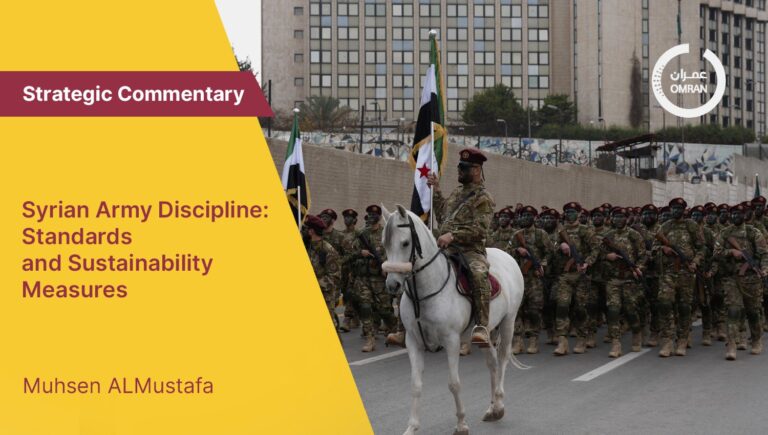
The discipline demonstrated during the execution of recent military operations represents a strategic opportunity to redefine the relationship between the army and society on the basis of law rather than fear. It must be sustained and carried forward, evolving into an institutional culture

With sanctions lifted and trade routes reopening, Aleppo can once again become Syria’s industrial and business hub. But the promise of recovery remains fragile so long as the city is governed by a volatile security situation that tolerates armed enclaves beyond state control

Syria’s new government faces growing attacks not for what it does, but for who it is: a Sunni-majority leadership.

Summary Introduction The Military Intelligence Division formed a cornerstone in the machinery of repression and subjugation…

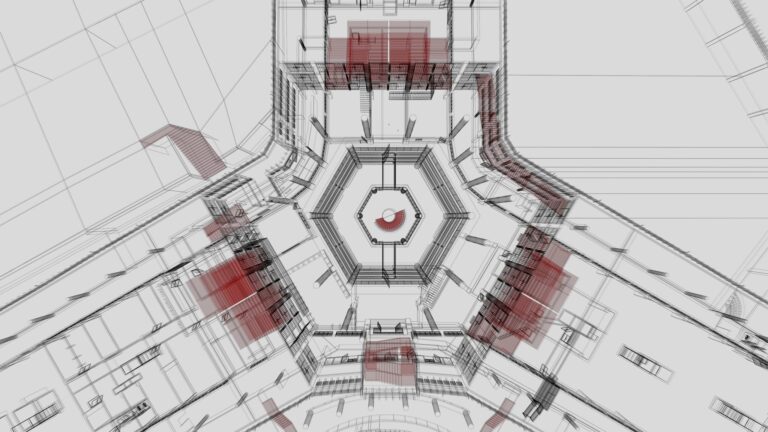
Summary The liberation of Sednaya Military Prison marks more than just the end of a notorious…

The Syrian landscape after the fall of Bashar al-Assad’s regime faces a web of complex and…